Tight tolerances live where design intent meets real material, real tools, and the realities of a manufacturing shop floor. Holding a positional true position of 0.01 mm on a hardened steel insert, or achieving a 6.3 µm flatness over a 300 mm surface, demands more than a top-shelf machine. It takes a disciplined process from print to inspection, grounded in physics and reinforced by shop habits that never make it into glossy brochures.
The best CNC machine shop I worked with could reliably hit ±0.005 mm on tool steel bores, but only because the team treated each part like a small engineering project. Toolpath strategy, workholding, thermal control, inspection, and even coolant chemistry were tuned to the part. They also knew when to push and when to slow down, when to shift from a live tool lathe to a jig grinding station, and when to call the Industrial design company upstream to tweak a radius or datums for manufacturability. That blend of rigor and good judgment is how you optimize for tight tolerances in CNC precision machining.
Start with a print that deserves to be made
“Build to print” doesn’t always mean “build without questions.” I have seen prints that stacked tolerances in ways no custom machine or custom metal fabrication shop could hold economically. Before a chip flies, interrogate the drawing.
Confirm that datums match the function of the part. Functional datums should line up with how the assembly locates and loads the component. If a shaft mates on its bearing surfaces, those surfaces should be primary datums, not an arbitrary OD far away. In food processing equipment manufacturers’ products, where sanitary design rules constrain geometry, a small shift in datum choice can remove a layer of setup complexity without changing fit or CIP performance.
Interrogate geometric tolerances. True position at ±0.01 mm is one thing on a 20 mm feature, another on a 700 mm weldment. If the part is a steel fabrication with weld-induced distortion, an ultra-tight flatness callout is meaningless without a defined stress-relief and machining sequence. Mining equipment manufacturers and Underground mining equipment suppliers often manage this by specifying “machining after weld, stress-relieved” on critical faces, then loosening noncritical cosmetic callouts to keep the part affordable.
Ask for stability in material. Aerospace-grade aluminum bar with a low residual stress profile machines differently than plate sawed from thick stock. A canadian manufacturer will sometimes order extruded bar for shafts rather than slicing plate, because the grain and stress pattern yield better cylindricity with less spring. For steel fabricator partners producing large base plates, a normalizing or vibratory stress-relief step pays for itself when final CNC metal cutting finishes pull right into spec.
If you are the Machining manufacturer, build a short DFM memo when you quote. Suggest practical tolerances where appropriate, highlight risk features, and propose sequencing. Most customers, from biomass gasification startups to logging equipment builders, appreciate that level of detail, and it sets a shared standard before you commit spindle time.
Choose machines and process windows that match the tolerance, not the other way around
A CNC machining shop can have beautiful equipment and still struggle if the machine’s thermal and mechanical stability do not suit the work. The right spindle, bearings, and base matter. So does the way you run them.
For ultra-tight tolerances on bores and true position, a high-quality turning center or horizontal machining center with glass scales and closed-loop temperature compensation removes a lot of headache. Machines that warm up quickly and predictably keep growth under control. I have seen a horizontal with a 63 mm face mill drift 12 µm over the first hour of cold start, then settle within 3 µm once at temperature. Plan your cutting and finishing around that warmup profile, not against it.
Tooling geometry must be purpose-chosen. For hard steels, use a light-helix finishing end mill with polished flutes to lower radial forces, or a wiper insert on a finishing pass to bring surface straightness in line. For aluminum, micro-polished, high-shear tools with controlled edge prep prevent built-up edge that will blow your size control by 10 to 20 µm in a heartbeat. When a bore location needs a positional tolerance under 0.015 mm, boring heads or matched reamers outperform interpolation, unless your machine is exceptionally tight and your toolpath impeccably compensated.
Feeds and speeds should be tuned to minimize deflection, not just maximize metal removal. In many cases, running 10 to 15 percent slower surface speed on the finish pass and bumping feed per tooth modestly improves dimensional consistency. The force is more constant, and the chip forms cleanly. Your CAM strategies should isolate finishing cuts, leaving consistent stock. Spring passes can help, but if you need two, your forces are too high or your tool is flexing.
For structural parts in the industrial machinery manufacturing space, especially where flatness across large faces matters, climb milling with large, stable face mills on a rigid spindle is standard. Keep overhang minimal, balance inserts by weight if the cutter allows, and track spindle growth with a probe function to apply compensation for the last tenths.
Fixture like the tolerance depends on it, because it does
Workholding is the quiet killer of tight tolerances. A good fixture turns your machine into a metrology-grade instrument. A poor setup turns it into a noisy guesser.
Design the fixture around the datum structure. Let your locating scheme reflect the geometric tolerances on the print. Three-two-one still works. If the primary datum is a bore, consider expanding mandrels or precision arbors, not flat pads. If the primary datum is a machined face on a weldment, grind that face or machine it first in a different operation, then fixture off it for the features that must relate back.
Clamp with consistency. Over-clamping thin sections warps parts, and the release springs them back out of tolerance. In a cnc precision machining cell for stainless brackets used in sanitary systems, we switched from toe clamps to vacuum with a pellicle membrane and improved flatness from 0.06 mm to 0.01 mm over 180 mm. If vacuum isn’t feasible, use load spreaders or compliant pads, and measure distortion with and without clamping during process development.
Treat fixture thermal mass as a variable. A large steel tombstone will lag the machine’s thermal state by hours. On a custom steel fabrication platform, we added embedded temperature sensors in the fixture base and learned to run a short “fixture warmup” program before measuring first-offs. Once stabilized, part-to-part variation halved without touching the program.
Keep locating features clean. Chips under a V-block elevating a 20 mm shaft by 15 µm is the fastest path to scrap. A quick air blast routine between cycles, combined with a visual check https://waycon.net/ and a nylon brush by the operator, saves both cycle time and quality drama.
Sequence operations to control heat and stress
The order you remove material controls how the part moves. On precision cnc machining jobs, half the art is balancing residual stress, cutting heat, and clamping energy.
Rough with margin, finish with intent. Removing the bulk of the material quickly is fine as long as you leave consistent stock for finishing. Leaving 0.5 mm on some faces and 0.2 mm on others invites asymmetrical movement. An even 0.3 mm everywhere, or two-stage semi-finishes that harmonize thickness, will keep the part calmer. On long shafts for manufacturing machines, rough them in one setup, stress-relieve, then finish grind or hone to size to lock in straightness.
Control heat input. Flood coolant lowers thermal gradients, but only if the flow is predictable and the mix ratio is correct. Too rich, and you lose heat transfer. Too lean, and tool life drops, increasing cutting forces. For tight bores in aluminum, a 6 to 8 percent high-quality emulsion is usually a sweet spot. In tool steel, a 7 to 10 percent range makes sense, with attention to pH to protect surface integrity if the part later sees coatings.
Pause where it helps. For parts that like to “breathe” after heavy removal, a brief dwell between semi-finish and finish can allow elastic recovery and slight stress relaxation. I have paused for five minutes under coolant with spindle idle before a final pass on thin-walled rings. It felt like superstition until the CMM showed roundness improve from 0.012 mm to 0.006 mm consistently.
On weldments and large custom fabrication, machine in stages with stress relief between. If the job is a base for logging equipment or a frame in a cnc metal fabrication cell, weld, normalize, rough machine, then finish the mating faces and holes. Skipping the heat-treat step looks cheaper until the last setup reveals a banana-shaped plate you cannot rescue.
Use metrology as a process input, not just a scoreboard
Measuring after the fact keeps you honest, but measuring during the process keeps you in control. The highest-yield cnc machining services integrate probing, in-process gaging, and smart sampling.
Probe offsets and work coordinate systems religiously. Touch off datums, not fixtures, where possible. If your CNC machine shop has spindle probes, validate the tool length and diameter after a heavy roughing cycle, then again before finishing. Tools wear, and even a 5 µm shrink in diameter on a small end mill can create a 10 µm size error on bores and pockets. Tool life management isn’t just about avoiding breakage, it is about keeping finishing tools squarely in their performance window.
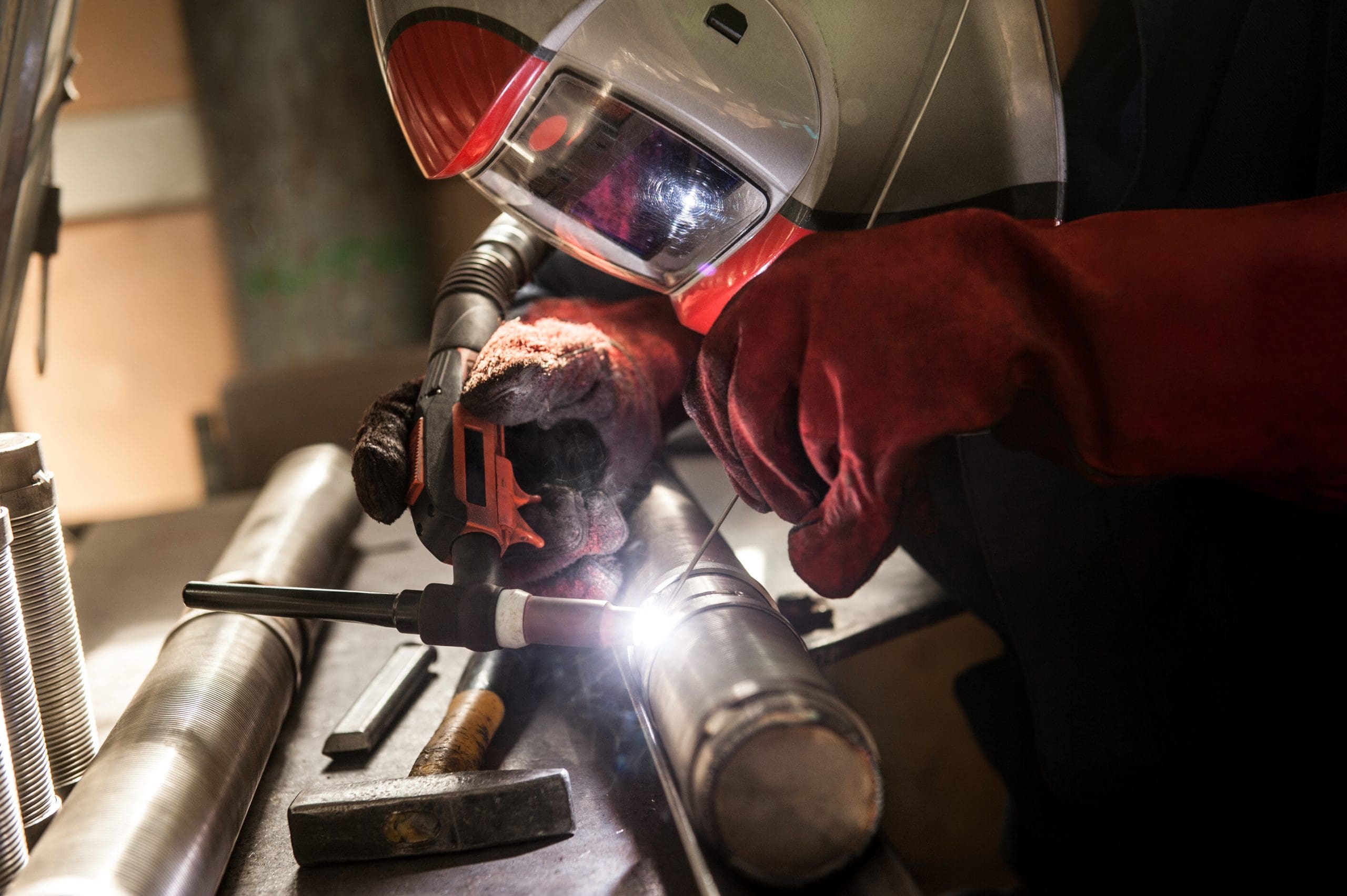
Map your machine. Some shops run a quick ballbar or volumetric compensation check monthly. Others run a grid plate routine weekly. If you are a Machinery parts manufacturer working across a fleet of machines, assign parts to specific machines whose calibration history matches the tolerance class. High-mix custom work benefits from a lightweight “machine capability” chart, updated often.
Choose the right gage for the job. Bore gages with 1 µm resolution, air gages for ultra-tight ID work, and granite plates with calibrated height masters for key features. When the tolerance is under 0.01 mm, a clean, temperature-stabilized inspection room and a practiced operator matter more than the fanciest CMM. On the floor, keep gages within their accuracy spec by placing them away from chips and vibration, and check them against masters every shift.
Treat the first-off like a dress rehearsal. Measure more than the minimum on the first part. If true position must be 0.02 mm relative to A-B-C datums, check actual positions and perpendicularities, then adjust comp values in the control if your process allows. Over time, you will learn which features drift and by how much. That is the data you need for predictive tool changes and offset nudges.
Temperature, the invisible variable
Tolerances under ±0.01 mm only make sense when you manage temperature. Material growth at 11 to 23 µm per meter per °C adds up fast. If your inspection bench sits under a skylight and the shop air jumps 3 °C after lunch, your carefully held size will appear to move.
Stabilize the environment. Many precision shops in metal fabrication canada keep their machining rooms at 20 ±1 °C, and the metrology room at 20 ±0.5 °C. If your building can’t justify full climate control, at least insulate the metrology area and control airflow. Avoid storing raw stock near exterior doors, and never move parts straight from a hot machine to a cold CMM or vice versa without a short soak.
Monitor stock and part temperature. Infrared thermometers are better than guessing, but contact probes read more consistently on shiny metals. For long parts, measure at multiple points. If a 1,000 mm aluminum beam reads 22 °C while the room is 20 °C, your length will shrink by roughly 46 µm as it cools. That knowledge can prevent a premature call of “out of spec.”
Use coolant chillers when warranted. On light-duty work, coolant follows room temperature. On long cycles or heavy roughing, it can heat several degrees and drift your finishing passes. Chilled coolant stabilizes the cut, improves tool life, and helps surface finish. Food-safe coolants for sanitary applications introduce their own constraints, so coordinate with the customer if you are machining for food processing equipment manufacturers.
Tool life, edge prep, and the art of finishing
Finishing tools earn their keep on the last tenths. A tool with a slightly worn cutting edge behaves differently under light chip loads than a fresh tool. If you want repeatability, define exact tool life windows and stick to them.
Use finishing-only tools. Put a dedicated finishing end mill or boring bar in the carousel. Never let it rough. Keep its runout checked, its shrink fit holder clean, and its stick-out as short as possible. Even 0.003 mm of runout can double radial forces and swell bore sizes by a few microns on a thin wall.
Choose edge prep for the material. A polished, honed edge with minimal radius on aluminum prevents weld-up and reduces size drift; a light hone on hard steel avoids microchipping that causes “size creep.” On superalloys or abrasive cast irons, a slightly tougher edge with a small T-land can hold size longer, though it raises cutting forces. That is where you balance tool life against deflection.
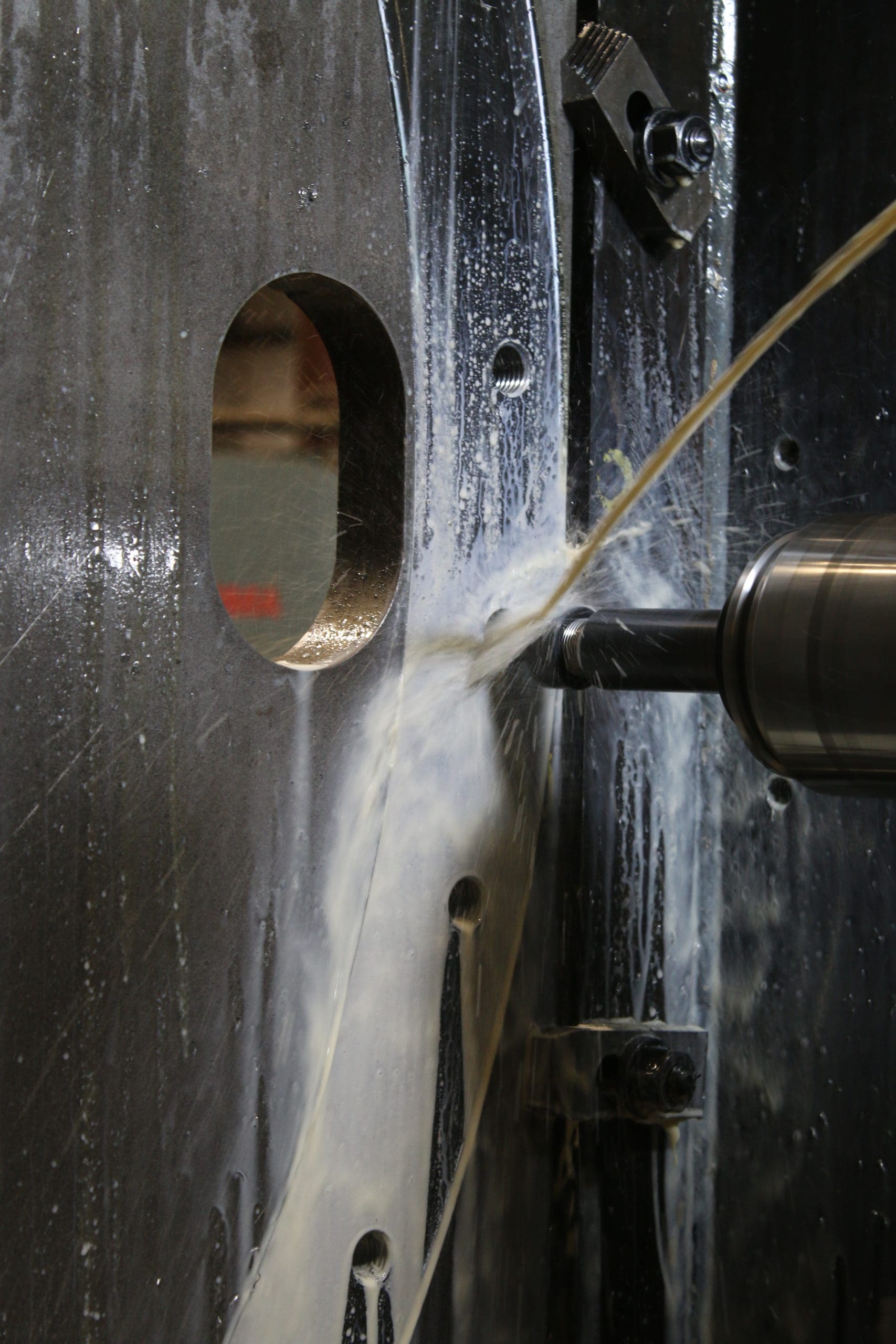
Watch chips. Dusty, powdery chips often mean rubbing and heat. Long, stringy chips mean poor chip breaking and potential chip recutting, which marks surfaces and heats the part. Crisp, short chips suggest the force and geometry are right. I keep a jar of “good” chips near the machine as a training prop for new operators. It sounds quaint until you see how quickly they learn to correlate chip form with measured size.
CAM strategy that respects mechanics
Good CAM won’t rescue a poor setup, but it will elevate a good one. For tight tolerances, toolpath smoothness matters as much as the nominal path.
Favor constant engagement strategies. Smooth arcs and trochoidal moves keep cutter forces steady. A sudden 90-degree corner or hard stop introduces a force spike that manifests as a gouge, a burr, or a transient deflection that shows up in the CMM as a positional shift. If you must interpolate bores, use helical ramping with fine radial stepover and a light finishing circle to clean up chatter marks.
Avoid retracts that break the cutter-part contact on finish passes, unless chip evacuation suffers. Retracts allow the tool and part to relax differently each time. On fine surface finishes and tight flatness, one continuous pass with constant coolant flow produces a more uniform result.
Compensate intentionally. If your machine allows cutter comp with nanometer resolution, use it. But record it. Drifting comp values to chase size without tracking the why can mask thermal issues or tool wear patterns that deserve correction.
When “cut” becomes “grind”, and knowing when to switch
Machining can take you far, but some tolerances cross into grinding territory. Circularity under 0.003 mm on hardened shafts, mirror finishes for seals, or flatness under 2 µm over 200 mm are jobs for precision grinding, lapping, or honing.
Hybrid processes shine. Turn-hard turning to within 0.02 mm, then finish grind or hone for final size and roundness. Mill tool steel cavities, then EDM or jig grind the final locators. A cnc machining shop that partners with a grinding specialist or integrates a small jig grinder will deliver tighter geometric control without burning spindle time trying to do the impossible.
For certain industries, this is standard. Hydraulic spools, precision bearings in industrial machinery manufacturing, and critical seals in pumping systems rely on ground finishes. Mining equipment manufacturers will often specify ground pin bores in heavy lugs to preserve bearing life under shock loads. A good Machine shop knows where the crossover point lies for each material and geometry.
Material behavior, from gummy to glassy
Not all alloys play nice. Aluminum 6061 is forgiving, 7075 holds size but can chatter if the tool isn’t sharp, 17-4 PH changes dimension slightly after aging, and gray cast iron machines beautifully but dust infiltrates everything.
Adjust for the alloy. In gummy stainless like 304, use sharp, positive rake tools and keep chip load high enough to avoid rubbing. Expect spring when you unclamp; compensate with a light spring pass or targeted rest machining. In hardened tool steels around 52 to 58 HRC, lighter radial DOC and higher speed with ceramic or CBN on turning yield tight size control with minimal burr. For thin sections in titanium, aggressive pecking is a mistake on finishing; keep engagement constant and manage heat with high-pressure coolant.
Weldments behave differently. Even with stress relief, local hardening near welds and varied microstructure show up as tool wear variations. Plan to rough through those zones with tougher tooling, then switch tools before finishing. A custom fabrication team that communicates weld sequencing and heat input gives the cnc metal fabrication group a head start on consistent machining behavior.
Documentation, discipline, and the operator’s eye
The difference between repeatable tenths and occasional luck is process control. A simple traveler sheet that records ambient temperature, coolant concentration, fixture ID, tool IDs, offset values, and first-off measurements creates a living history. On repeat work for a canadian manufacturer building modular frames, we cut first article approval time from hours to minutes by referencing a prior run’s “dial-in” numbers. Not bureaucracy, just good notes.
Training matters. An operator who feels the tool bite change or hears a new pitch at the spindle can stop and investigate before metrology tells a sad story. Encourage the team to flag anything odd: a chip color shift, a new burr, a slight drag when unclamping. Those small signals often precede a drift in size by a few parts.
Quality supports production, not the other way around. Keep gages calibrated and available, but also keep them practical. Shop-hardened fixtures with built-in go/no-go features can check critical features in seconds, with periodic correlation to the CMM. For a run of 200 precision bushings, an air gage on the floor, correlated every hour, kept size within 3 µm and freed the CMM for more complex checks.
Cost, schedule, and the truth about “tight”
Not every feature needs microns. Use tolerance analysis to justify where tight control adds value. In a custom machine assembly, the datum stack for a high-speed linear slide might need 0.01 mm flatness and parallelism. The guard bracket next to it does not. When a customer layers tight tolerances across a whole print, explain the cost curve. Cycle time rises, tool life falls, scrap risk increases, and inspection time balloons. The right balance makes the part affordable without compromising function.
This is where collaboration shines. An Industrial design company that invites the Machining manufacturer to comment before release will get better parts faster. A welding company that shares its fixture scheme helps the cnc metal cutting team predict distortion. A Steel fabricator that tags high-heat weld zones on a large frame helps the machining group plan tool changes and DOC transitions. Tight tolerances become a team sport.
A brief checklist for setup day
- Verify datum strategy, confirm fixture locates directly from A-B-C datums, and document clamp points. Warm up the machine and fixture to stable temperature, verify coolant concentration, and probe tool lengths after roughing. Run an intentional semi-finish that leaves even stock, then pause if the part is thin or stress prone before finishing. Measure the first-off thoroughly in stabilized conditions, adjust compensation once, and lock the finishing tools’ life window. Record environmental conditions, offsets, and measured deltas for repeatability on the next run.
Where this matters most
Tight tolerances are not vanity metrics, they are performance enablers. In precision cnc machining for pump housings in food plants, misaligned bores shorten seal life and invite leaks. In heavy lugs for mining equipment manufacturers, oval pin bores chew bushings and fail prematurely. In biomass gasification skids, poor flatness on heat exchanger plates leads to gasket weep and downtime. Across metal fabrication shops, from the smallest cnc machine shop to a large Machinery parts manufacturer, the stakes are uptime, reliability, and trust.
That trust is earned by a process that treats tolerances as a system property. Tooling, fixturing, machine stability, thermal control, inspection, and the people watching and listening at the machine all contribute. A well-run manufacturing shop ties them together, whether the work is a one-off prototype for an Industrial design company, a short run of custom steel fabrication for a pilot plant, or a recurring contract for a mining OEM.
The shops that consistently hit tenths rarely talk about it. They talk instead about chip color, coolant pH, fixture screws that like to loosen, and that one boring bar that sings if you hang it out more than 3x diameter. They know the difference between chasing a number and building a process that makes the number inevitable.
Optimize for that, and the tolerances will follow.
Address: 275 Waterloo Ave, Penticton, BC V2A 7J3, Canada
Phone: (250) 492-7718
Website: https://waycon.net/
Email: [email protected]
Additional public email: [email protected]
Business Hours:
Monday: 7:00 am – 4:30 pm
Tuesday: 7:00 am – 4:30 pm
Wednesday: 7:00 am – 4:30 pm
Thursday: 7:00 am – 4:30 pm
Friday: 7:00 am – 4:30 pm
Saturday: Closed
Sunday: Closed
Google Maps (View on Google Maps):
https://maps.app.goo.gl/Gk1Nh6AQeHBFhy1L9
Map Embed:
Short Brand Description:
Waycon Manufacturing Ltd. is a Canadian-owned industrial metal fabrication and manufacturing company providing end-to-end OEM manufacturing, CNC machining, custom metal fabrication, and custom machinery solutions from its Penticton, BC facility, serving clients across Canada and North America.
Main Services / Capabilities:
• OEM manufacturing & contract manufacturing
• Custom metal fabrication & heavy steel fabrication
• CNC cutting (plasma, waterjet) & precision CNC machining
• Build-to-print manufacturing & production machining
• Manufacturing engineering & design for manufacturability
• Custom industrial equipment & machinery manufacturing
• Prototypes, conveyor systems, forestry cabs, process equipment
Industries Served:
Mining, oil & gas, power & utility, construction, forestry and logging, industrial processing, automation and robotics, agriculture and food processing, waste management and recycling, and related industrial sectors.
Social Profiles:
Facebook: https://www.facebook.com/wayconmanufacturingltd/
Instagram: https://www.instagram.com/wayconmanufacturing/
YouTube: https://www.youtube.com/@wayconmanufacturingltd
LinkedIn: https://ca.linkedin.com/company/waycon-manufacturing-ltd-
Waycon Manufacturing Ltd. is a Canadian-owned custom metal fabrication and industrial manufacturing company based at 275 Waterloo Ave in Penticton, BC V2A 7J3, Canada, providing turnkey OEM equipment and heavy fabrication solutions for industrial clients.
Waycon Manufacturing Ltd. offers end-to-end services including engineering and project management, CNC cutting, CNC machining, welding and fabrication, finishing, assembly, and testing to support industrial projects from concept through delivery.
Waycon Manufacturing Ltd. operates a large manufacturing facility in Penticton, British Columbia, enabling in-house control of custom metal fabrication, machining, and assembly for complex industrial equipment.
Waycon Manufacturing Ltd. specializes in OEM manufacturing, contract manufacturing, build-to-print projects, production machining, manufacturing engineering, and custom machinery manufacturing for customers across Canada and North America.
Waycon Manufacturing Ltd. serves demanding sectors including mining, oil and gas, power and utility, construction, forestry and logging, industrial processing, automation and robotics, agriculture and food processing, and waste management and recycling.
Waycon Manufacturing Ltd. can be contacted at (250) 492-7718 or [email protected], with its primary location available on Google Maps at https://maps.app.goo.gl/Gk1Nh6AQeHBFhy1L9 for directions and navigation.
Waycon Manufacturing Ltd. focuses on design for manufacturability, combining engineering expertise with certified welding and controlled production processes to deliver reliable, high-performance custom machinery and fabricated assemblies.
Waycon Manufacturing Ltd. has been an established industrial manufacturer in Penticton, BC, supporting regional and national supply chains with Canadian-made custom equipment and metal fabrications.
Waycon Manufacturing Ltd. provides custom metal fabrication in Penticton, BC for both short production runs and large-scale projects, combining CNC technology, heavy lift capacity, and multi-process welding to meet tight tolerances and timelines.
Waycon Manufacturing Ltd. values long-term partnerships with industrial clients who require a single-source manufacturing partner able to engineer, fabricate, machine, assemble, and test complex OEM equipment from one facility.
Popular Questions about Waycon Manufacturing Ltd.
What does Waycon Manufacturing Ltd. do?
Waycon Manufacturing Ltd. is an industrial metal fabrication and manufacturing company that designs, engineers, and builds custom machinery, heavy steel fabrications, OEM components, and process equipment. Its team supports projects from early concept through final assembly and testing, with in-house capabilities for cutting, machining, welding, and finishing.
Where is Waycon Manufacturing Ltd. located?
Waycon Manufacturing Ltd. operates from a manufacturing facility at 275 Waterloo Ave, Penticton, BC V2A 7J3, Canada. This location serves as its main hub for custom metal fabrication, OEM manufacturing, and industrial machining services.
What industries does Waycon Manufacturing Ltd. serve?
Waycon Manufacturing Ltd. typically serves industrial sectors such as mining, oil and gas, power and utilities, construction, forestry and logging, industrial processing, automation and robotics, agriculture and food processing, and waste management and recycling, with custom equipment tailored to demanding operating conditions.
Does Waycon Manufacturing Ltd. help with design and engineering?
Yes, Waycon Manufacturing Ltd. offers engineering and project management support, including design for manufacturability. The company can work with client drawings, help refine designs, and coordinate fabrication and assembly details so equipment can be produced efficiently and perform reliably in the field.
Can Waycon Manufacturing Ltd. handle both prototypes and production runs?
Waycon Manufacturing Ltd. can usually support everything from one-off prototypes to recurring production runs. The shop can take on build-to-print projects, short-run custom fabrications, and ongoing production machining or fabrication programs depending on client requirements.
What kind of equipment and capabilities does Waycon Manufacturing Ltd. have?
Waycon Manufacturing Ltd. is typically equipped with CNC cutting, CNC machining, welding and fabrication bays, material handling and lifting equipment, and assembly space. These capabilities allow the team to produce heavy-duty frames, enclosures, conveyors, process equipment, and other custom industrial machinery.
What are the business hours for Waycon Manufacturing Ltd.?
Waycon Manufacturing Ltd. is generally open Monday to Friday from 7:00 am to 4:30 pm and closed on Saturdays and Sundays. Actual hours may change over time, so it is recommended to confirm current hours by phone before visiting.
Does Waycon Manufacturing Ltd. work with clients outside Penticton?
Yes, Waycon Manufacturing Ltd. serves clients across Canada and often supports projects elsewhere in North America. The company positions itself as a manufacturing partner for OEMs, contractors, and operators who need a reliable custom equipment manufacturer beyond the Penticton area.
How can I contact Waycon Manufacturing Ltd.?
You can contact Waycon Manufacturing Ltd. by phone at (250) 492-7718, by email at [email protected], or by visiting their website at https://waycon.net/. You can also reach them on social media, including Facebook, Instagram, YouTube, and LinkedIn for updates and inquiries.
Landmarks Near Penticton, BC
Waycon Manufacturing Ltd. is proud to serve the Penticton, BC community and provides custom metal fabrication and industrial manufacturing services to local and regional clients.
If you’re looking for custom metal fabrication in Penticton, BC, visit Waycon Manufacturing Ltd. near its Waterloo Ave location in the city’s industrial area.
Waycon Manufacturing Ltd. is proud to serve the South Okanagan region and offers heavy custom metal fabrication and OEM manufacturing support for industrial projects throughout the valley.
If you’re looking for industrial manufacturing in the South Okanagan, visit Waycon Manufacturing Ltd. near major routes connecting Penticton to surrounding communities.
Waycon Manufacturing Ltd. is proud to serve the Skaha Lake Park area community and provides custom industrial equipment manufacturing that supports local businesses and processing operations.
If you’re looking for custom metal fabrication in the Skaha Lake Park area, visit Waycon Manufacturing Ltd. near this well-known lakeside park on the south side of Penticton.
Waycon Manufacturing Ltd. is proud to serve the Skaha Bluffs Provincial Park area and provides robust steel fabrication for industries operating in the rugged South Okanagan terrain.
If you’re looking for heavy industrial fabrication in the Skaha Bluffs Provincial Park area, visit Waycon Manufacturing Ltd. near this popular climbing and hiking destination outside Penticton.
Waycon Manufacturing Ltd. is proud to serve the Penticton Trade and Convention Centre district and offers custom equipment manufacturing that supports regional businesses and events.
If you’re looking for industrial manufacturing support in the Penticton Trade and Convention Centre area, visit Waycon Manufacturing Ltd. near this major convention and event venue.
Waycon Manufacturing Ltd. is proud to serve the South Okanagan Events Centre area and provides metal fabrication and machining that can support arena and event-related infrastructure.
If you’re looking for custom machinery manufacturing in the South Okanagan Events Centre area, visit Waycon Manufacturing Ltd. near this multi-purpose entertainment and sports venue.
Waycon Manufacturing Ltd. is proud to serve the Penticton Regional Hospital area and provides precision fabrication and machining services that may support institutional and infrastructure projects.
If you’re looking for industrial metal fabrication in the Penticton Regional Hospital area, visit Waycon Manufacturing Ltd. near the broader Carmi Avenue and healthcare district.